Product Owner / Product Manager portfolio

Pavel Kureza

I shape product decisions, define the experience, make the trade-offs, and stay accountable through launch and operation

Valencia, Spain · On-site in Valencia · Remote worldwide

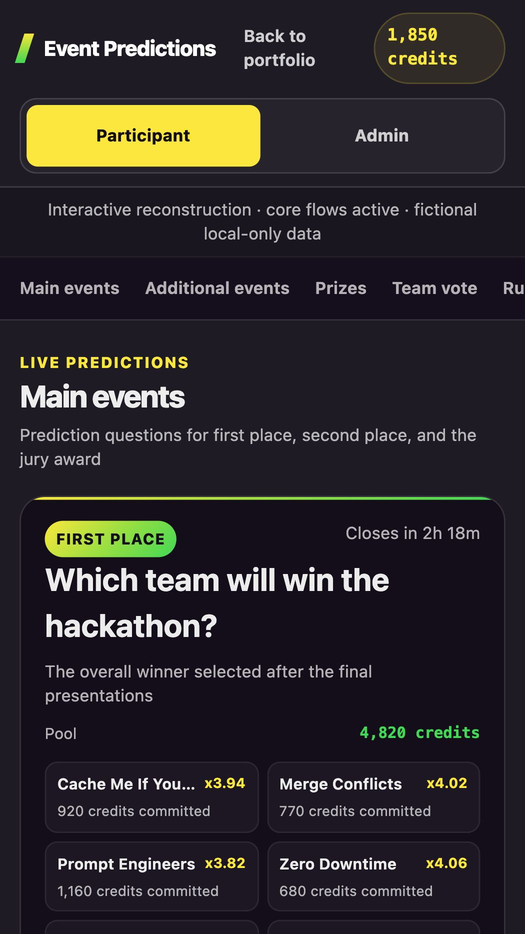
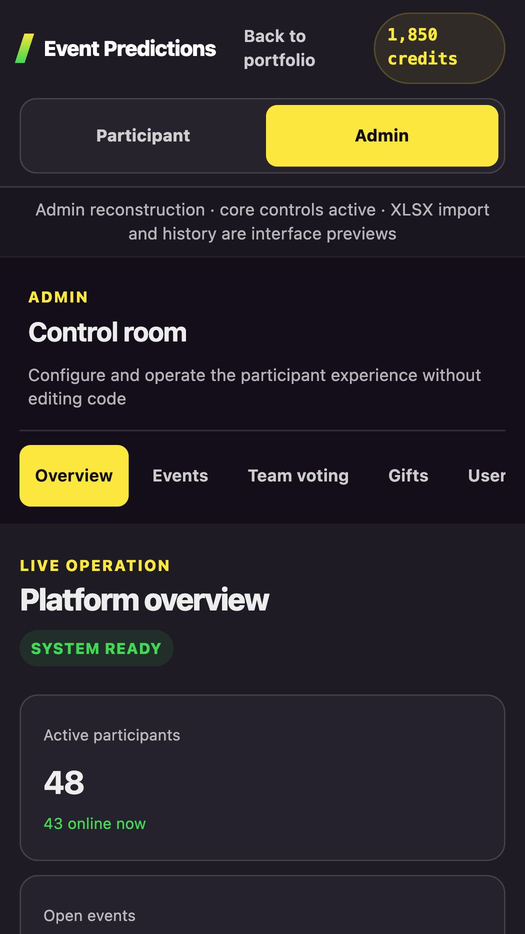
A product you can inspect Participant experience and no-code operations

Product work

Two systems I conceived, shaped, validated, and brought into real use

Case 2 of 2Course-production system

Rebuilding the course-production workflow

Process transformation and team enablement

When I joined the company, digital courses were assembled manually in Articulate Storyline and Rise and largely followed a slide-based format. AI avatars were already used for narration, but presentations, visual production, interactions, and final assembly still depended on repetitive manual work.

I treated this as a production-system problem and turned the work into a shared team workflow rather than a series of one-off experiments.

Reusable output
30+HTML simulations createdbuilt from shared tokens and components
Operating model
3repeatable production pathspresentation drafts · scene-based video · simulations
Adoption
Team-wideshared workflow in usedocumented for subsequent courses and materials
Workflow schematic — from manual slide assembly to three repeatable production paths

First change: finding a better way to produce presentations

I researched available tools against the department's content and online-course production needs. Genspark covered most of them, so I selected and introduced it, then trained the team to create structured presentation drafts from prompts.

Starting from a structured draft shifted the team's time away from repetitive slide assembly and toward content decisions, review, and refinement.

Second change: designing a video-course production system

Once presentation drafting became faster, I expanded the approach into video. I designed an end-to-end production sequence:

  1. Source material
  2. Script
  3. Micro-scenes
  4. Scene storyboards
  5. Generated visuals
  6. Generated video
  7. Voice-over
  8. Premiere Pro editing
  9. Storyline integration

The key decision was to split long scripts into short, controllable micro-scenes and define the visual logic before generating video. This preserved a consistent visual language and turned video-led course production into a repeatable process rather than one-off experimentation.

Workflow schematic — each micro-scene can be reviewed and corrected before final assembly

Third change: extending Storyline with reusable simulations

I then applied the same system thinking to interactivity. Standard Storyline mechanics required complex trigger chains and still produced mostly quiz-like experiences. I designed realistic simulation flows and reusable interaction rules, then used Codex to generate the implementation.

I integrated the simulations into real course flows and taught the team how to design and deploy the same type of interaction independently.

Workflow schematic — reusable web interactions embedded inside the Storyline course shell

Scaling the change beyond my own work

The transformation mattered only if it could extend beyond my own production work. I documented and taught the methods so they could be applied without depending on me for every production task. This reduced repetitive production work and gave the team repeatable ways to create richer formats for subsequent courses and materials.

Workflow schematic — documented methods, training, and whole-team adoption of the broader workflow

Experience

A career built around making complex work understandable, operable, and useful

BrainRocket

Senior E-learning Developer · Apr 2026–Aug 2026
E-learning Developer · Jan 2025–Mar 2026

  • Owned the corporate prediction and voting platform from opportunity and requirements through product decisions, testing, launch, and live operation
  • Redesigned course production around prompt-generated drafts, scene-based video, and reusable simulations; trained the team, which adopted the broader workflow
  • Coordinated cross-functional stakeholders through requirements, reviews, risks, approvals, and acceptance

Mediapark Group

L&D Head · Aug 2023–Aug 2024

  • Led the L&D function and managed a team of trainers
  • Turned stakeholder needs into learning strategy and led trainer hiring and development
  • Defined requirements for LMS evaluation and HR automation while coordinating operational improvements

Home Shopping Russia

Business Trainer · Apr 2022–Jul 2023

  • Analyzed contact-center and CRM workflows and produced SQL-based operational reports
  • Translated stakeholder needs into requirements for CRM, employee NPS, lead routing, and IP telephony
  • Built a Telegram bot and feedback form to support daily operations

European Gymnasium

Teacher of Robotics and Programming, part-time · Sep 2020–May 2022

  • Designed primary-school programs in robotics and programming
  • Delivered the programs in a part-time teaching role

Tools and working stack

The tools I use to move from analysis and design through production, launch, and iteration

Product design and prototyping
Figma, semantic design tokens, component libraries, PowerPoint
AI-assisted product development and data
HTML, CSS, JavaScript, TypeScript, React, Node.js, Express, REST APIs, SQLite, PostgreSQL
Learning and media
Articulate Storyline 360, Articulate Rise, SCORM, Web Objects, Adobe Premiere Pro, ffmpeg, HeyGen
Delivery and operations
Git, VPS and server deployment, Cloudflare Tunnel, PM2, PWA, web push, monitoring, Google Workspace
AI in the workflow
OpenAI Codex, ChatGPT, Claude, Genspark

About

Most of my best work begins with a task that matters but is not yet well structured

I am comfortable moving between a business problem, detailed source material, user experience, technical constraints, and the people who need to approve or operate the result. My background in learning taught me how to make complexity understandable. Product work gave that skill a wider purpose: deciding what should be built, why it matters, and how to know whether it works.

How I work

  • Start with the problem and the decision, not the requested format
  • Separate confirmed facts, assumptions, and open questions
  • Make trade-offs and contribution boundaries explicit
  • Use prototypes and real artifacts to make discussions concrete
  • Treat validation, documentation, and handoff as part of delivery

Learning product portfolio

Four learning products across design systems, iGaming, AI workflows, and pitching—showing how I turn complex material into structured, visual, and interactive learning experiences

Work sample placeholderPublication approval pending

Design Systems

Shows how the system, component logic, and production rules keep learning experiences consistent at scale

Work sample placeholderPublication approval pending

iGaming

Structures an unfamiliar domain into a coherent journey, from core language to product and operational context

Work sample placeholderPublication approval pending

Claude Course

Covers use-case discovery, secure workflows, source verification, and the finished learning package

Work sample placeholderPublication approval pending

Pitching Course

Turns presentation logic into a practical learning experience built around context, tension, decision, and delivery

Looking for product judgment backed by hands-on delivery?

I’m looking for a Product Owner or Product Manager role combining product judgment, business analysis, and hands-on delivery